
NRP 82 is the first National Research Programme to adopt a transdisciplinary approach
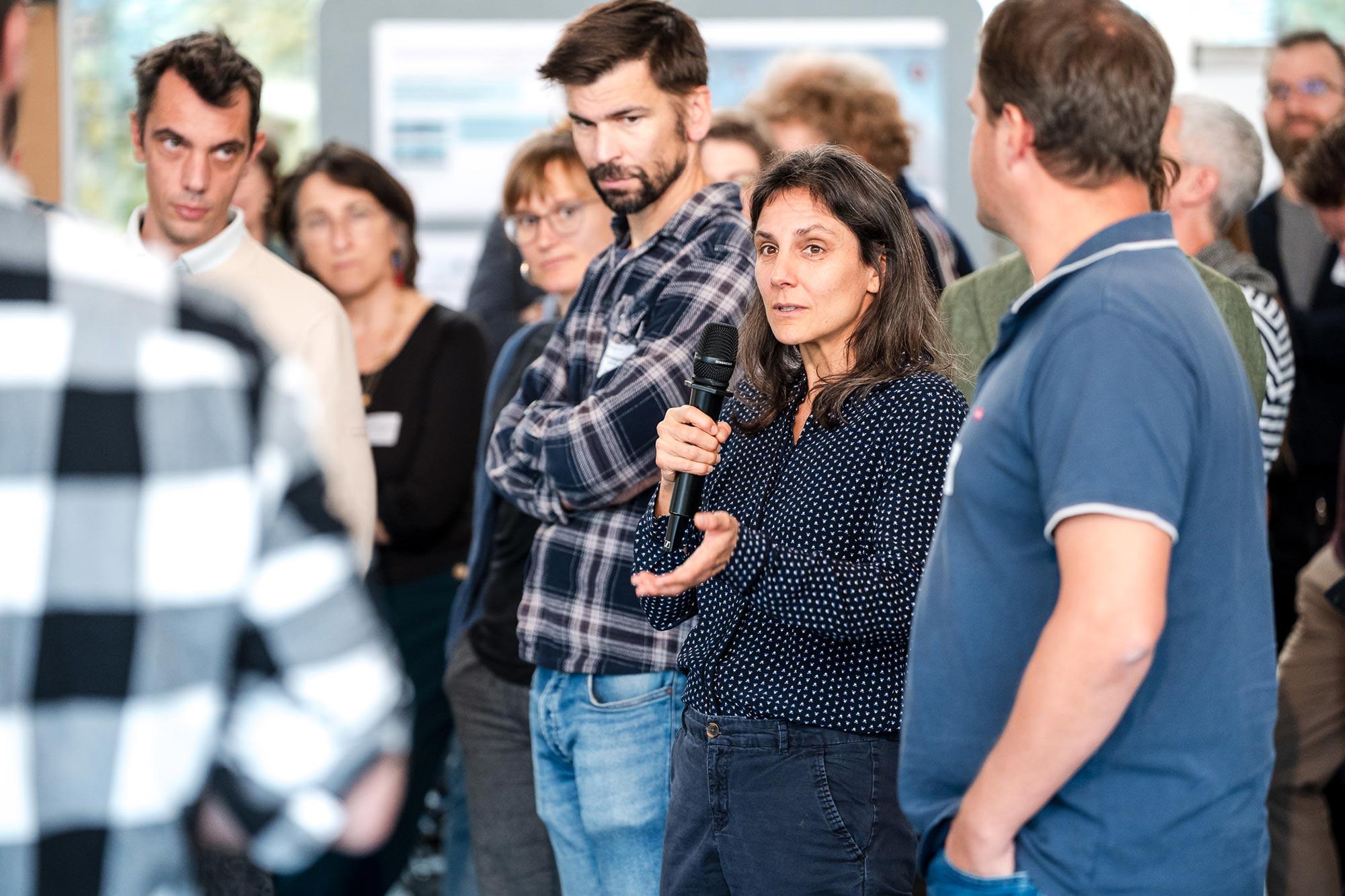
NRP 82 is the first National Research Programme to work with a Theory of Change. The concept makes impact assumptions explicit. Learning groups strengthen the cross-project exchange on transformation.
The National Research Programme 82 is pioneering: from the outset, it has pursued a transdisciplinary approach. All 15 projects were developed by scientific partners in collaboration with stakeholders from society, NGOs or public authorities. In each case, they are based on a project-specific Theory of Change (ToC). The ToC links the research activities to the desired societal impacts: it describes how the research should lead to changes and what long-term impacts it aims to achieve. This makes it possible to plan so-called transformation pathways, reflect on them and adapt them during the process.
Each project formulated its planned outputs, outcomes and impacts in its ToC – during and after the research phase. Although the projects are thematically diverse – from biodiversity monitoring to education in schools – each ToC explicitly states which aspects of biodiversity are addressed. The visible transformation pathways also make the collaboration with societal actors, media and decision-makers transparent.
Building learning groups
A positioning exercise at the kick-off meeting on 12 November showed that the 15 project teams already have a wide range of transdisciplinary competencies. This diversity can be used – through active exchange in learning groups.
The learning groups support the project teams on their way to transformation. Topics can include the operationalisation of the project’s ToC, biodiversity-related issues, methods for involving stakeholders, or the use of communication tools. The groups are formed along the lines of thematic overlaps and similar impact orientations. Depending on their focus, project participants can get involved in one or more groups – the composition can evolve over the course of the programme.
The learning groups organise themselves and independently determine the agenda and meeting rhythm. The experts for transdisciplinarity and knowledge exchange provide support in the conception and moderation. Where relevant, members of the Steering Committee or external stakeholders will also be involved.
In the first half of 2026, the learning groups will start with small kick-offs. As informal exchange spaces, they will strengthen methodological reflection, cross-project collaboration, and self-responsibility in the transformation process. They will also provide insights that will be incorporated into the programme synthesis.