
NRP 82 Engagement Board: research and societal practice in dialogue
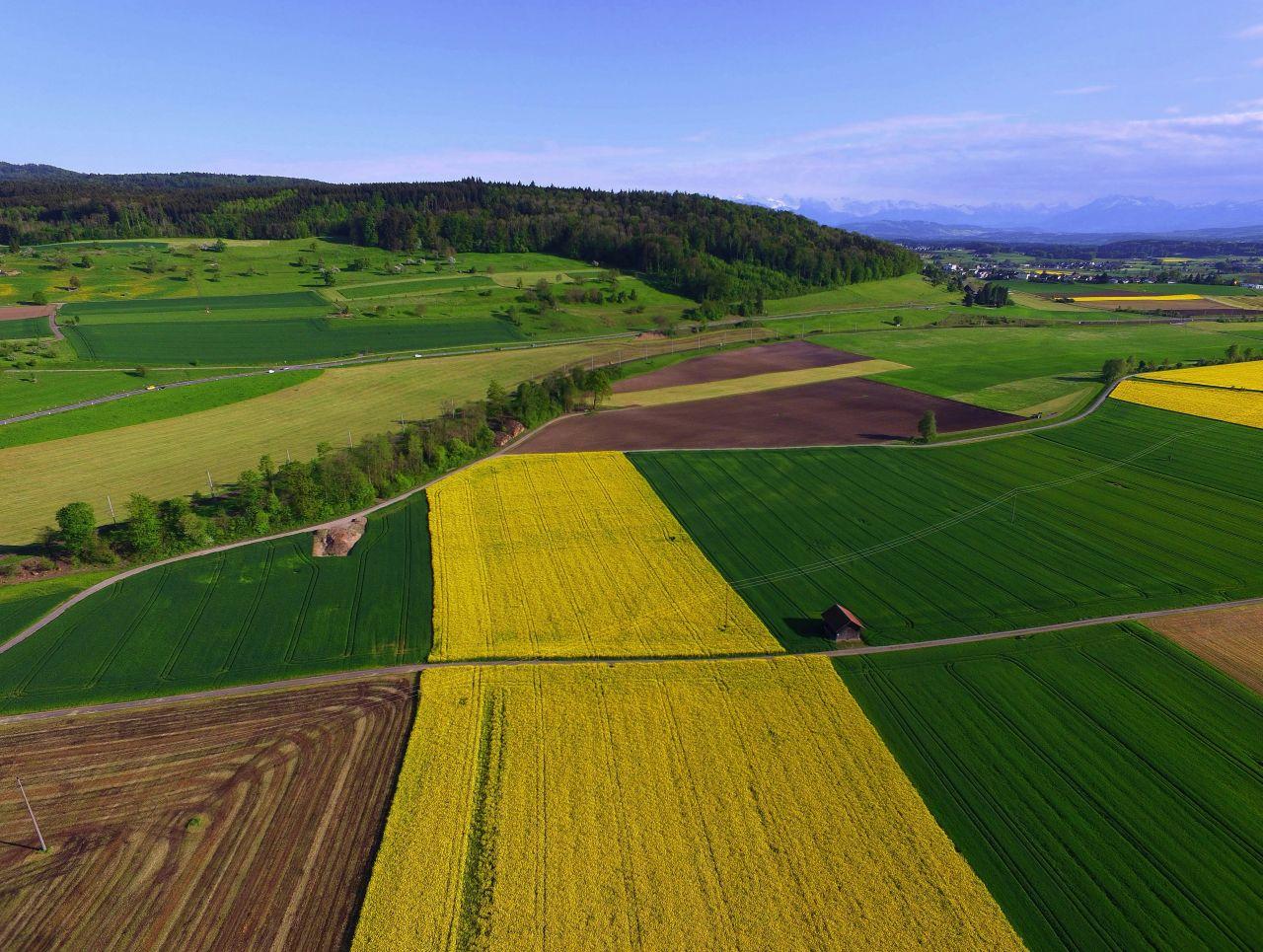
NRP 82 has established an Engagement Board bringing together representatives from politics, business, civil society and education to support the application of research in practice. They met for the first time in Bern on 12 May 2026.
In Switzerland, almost one in three animal and plant species is considered threatened, and nearly one in two habitats is under pressure. It was against this backdrop that Markus Fischer, President of the Steering Committee of NRP 82, opened the first meeting of the Engagement Board on 12 May 2026 at Haus der Universität in Bern. Fischer outlined why Switzerland needs wide-ranging research: almost all ecosystem services — from pollination and water regulation to protection against natural hazards — are declining worldwide. Reversing this trend calls for cultural, economic, political and technological change all at once.
The Engagement Board supports NRP 82 as a non-scientific advisory body. It brings together figures from politics, business, civil society and education. Their remit: to safeguard the programme's societal relevance, strengthen its profile and reach, and activate networks for implementing and scaling up research findings.
Where biodiversity meets practice
Two short presentations from the ongoing programme opened the meeting. The RAVEN project (Tobias Schulz, WSL; Norbert Kräuchi, Canton of Aargau) addresses a structural dilemma of biodiversity policy: measures to create more semi-natural areas meet with broad agreement in principle among agriculture, forestry and nature conservation — yet regularly fail as soon as concrete projects are at stake. A lack of regional perspectives and insufficient exchange between agriculture, forestry and settlement areas lead to conflict. In the Lenzburg Seetal test region (Canton of Aargau), RAVEN is developing a participatory approach: through interviews, ecological modelling and visioning workshops, farmers, foresters and conservationists jointly develop a shared, spatially explicit perspective on biodiversity protection — complemented by a digital backcasting platform for practitioners, which plans backwards from the desired future state.
The BERNICE project (Thibault Lachat, BFH-HAFL; Regina Weber, SBB) uncovers an unexpected contradiction in the forest: early and late development stages are hotspots of species diversity — but offer little protection against avalanches, rockfall or landslides. The optimal protective effect lies in the intermediate stages, which are less suitable for many forest species. SBB, which owns around 1,000 hectares of protection forest along its network and benefits from a further 7,500 hectares, wants to know: where can biodiversity measures be implemented without jeopardising the protective function? Should BERNICE succeed in demonstrating viable synergies, SBB — as the operator of Switzerland's largest rail infrastructure — could quickly serve as a model for other infrastructure and forest owners as well as cantonal authorities.
What the members contribute
In the second part of the meeting, the members explored in a contribution-mapping session which networks, perspectives and expectations they bring to the table. A dense picture emerged: from agricultural and forestry associations through cantonal administrations and federal authorities to municipal planning offices and parliamentary connections. Across these contributions, one shared question emerged that occupies several members: how can the value of biodiversity and ecosystem services be communicated more convincingly — to businesses, municipalities and agriculture?
NRP 82 entered its research phase in the second half of 2025. Its 15 projects — from monitoring alpine plant diversity to urban ecology — have funding of 11.2 million Swiss francs at their disposal. The Engagement Board will accompany the programme throughout its entire duration until 2030 and will convene twice a year.
Members of the NRP 82 Engagement Board (as of October 2026)
Marcel Hänggi, science journalist and author; staff member of the Swiss Energy Foundation (SES)
Stefan Hasler, Director of the VSA (Swiss Water Association)
Antoinette Hunziker-Ebneter, Founding Partner and Vice-Chair of the Board of Directors of Forma Futura Invest AG
Matthias Samuel Jauslin, National Councillor (GLP, Canton of Aargau); Owner and Managing Director of Jost Wohlen AG
Damian Jerjen, Director of EspaceSuisse; Professor of Practice at D-BAUG, ETH Zurich
Bernard Lehmann, Chair of the Foundation Board of FiBL Switzerland; President of the SCNAT Platform Science and Policy, Chair Emeritus of the HLPE-FSN (UN High Level Panel of Experts on Food Security and Nutrition); Professor Emeritus of Agricultural Economics, ETH Zurich
Christoph Nabholz, Founder of RiskInsight Consulting; former Chief Research & Sustainability Officer, Swiss Re
Daphné Rüfenacht, Swiss Union of Cities (SSV)
Cristina Schaffner, Director of Bauenschweiz
Catherine Strehler-Perrin, Head of the Biodiversity and Landscape Division, General Directorate for the Environment of the Canton of Vaud (DGE-BIODIV)
Cristina Schaffner and Christoph Nabholz have joined the Engagement Board. It now comprises ten members.