
NewUrbES – Cities as Living Ecosystems
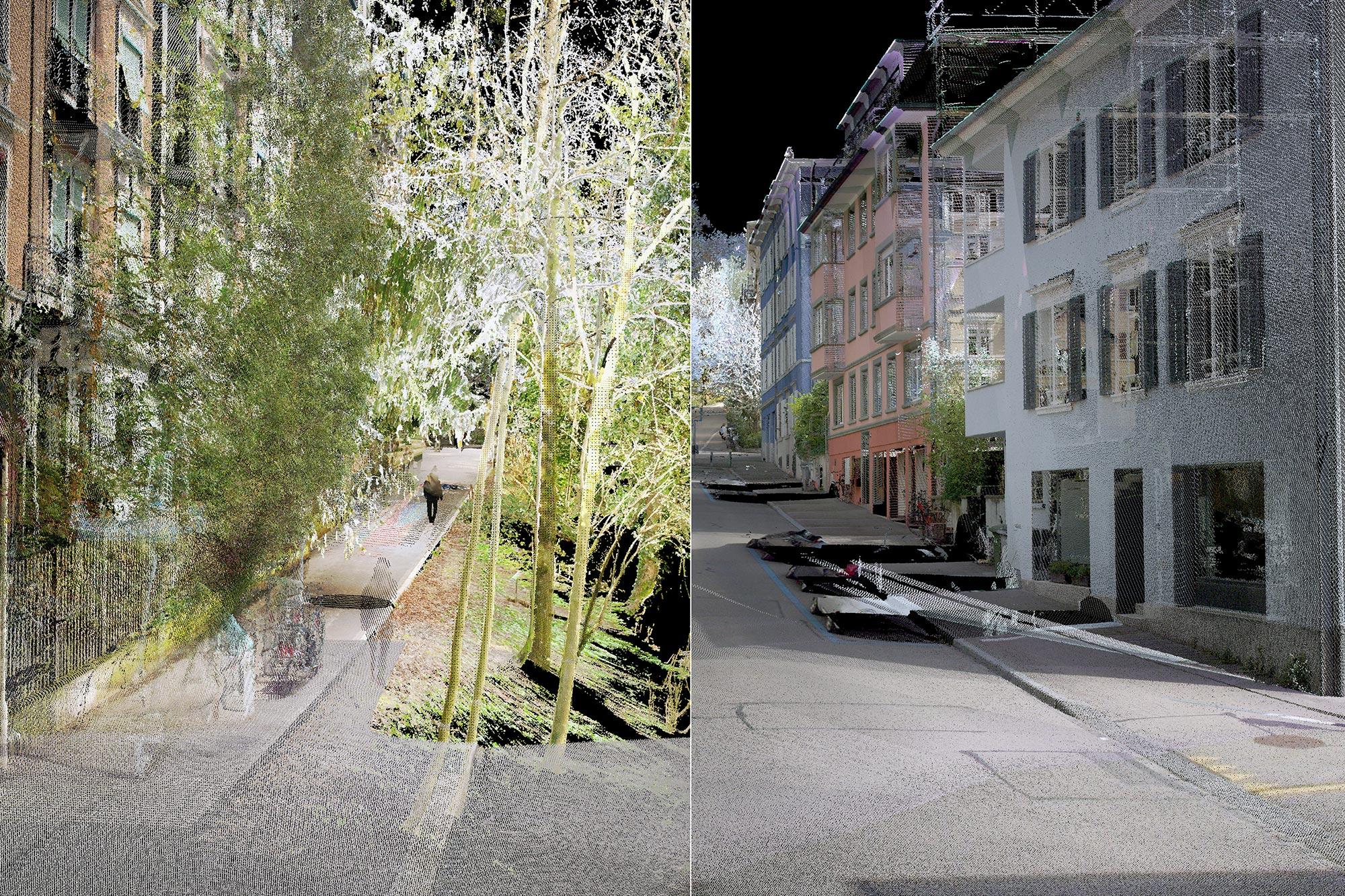
NewUrbES reimagines cities as ecosystems where buildings act as living organisms, enhancing biodiversity, ecosystem services, and human–nature coexistence through innovative design, materials, and planning.
Project description
Objective
NewUrbES explores how cities can be reimagined as ecosystems in which people and nature thrive together. By integrating ecological design, regenerative materials, and adaptive planning, the project seeks to transform building envelopes, facades, and roofs into habitats linking indoor and outdoor spaces for humans and non-human species alike. Anchored in two Swiss real-case studies, NewUrbES combines empirical studies, experiments, and digital technologies in a design-science loop that continuously tests and refines ideas.
Relevance
Urbanisation challenges biodiversity but also creates opportunities for regeneration. NewUrbES promotes a paradigm shift where built structures function as ecosystems, connecting fragmented green spaces and reducing the global biodiversity footprint. To support this transformation, the project develops regenerative materials, a toolbox enabling architects, planners, and engineers to assess ecosystem services impacts, a serious game to negotiate barriers of urban transformation, and clear recommendations for planners, policymakers, and citizens. Especially in affluent societies such as Switzerland, this approach is crucial for restoring biodiversity and enhancing ecosystem services in dense urban environments.
Transdisciplinary Approach
The project builds on a transdisciplinary process that bridges ecology, design, material science, and planning, supported by digital technologies and iterative design-science loops. It combines empirical research on materials and urban ecosystem services with 3D virtual experiments and real-case studies to generate, test, and refine solutions for urban living spaces integrating humans and other species. From the outset, challenges were defined jointly with stakeholders to ensure that outcomes are relevant for both science and practice. Implementation is explored through serious games and collaboration with the practice partner Natur & Wirtschaft, which integrates results into its building label system. This guarantees that findings inform building codes, design practices, and investment strategies, enabling systemic transformation towards urban environments that enhance biodiversity and ecosystem services.
Original Titel
NewUrbES – Co-Creating New Urban Ecosystems fostering urban biodiversity and ecosystem services