
Boosting farmland biodiversity through collaborative measures
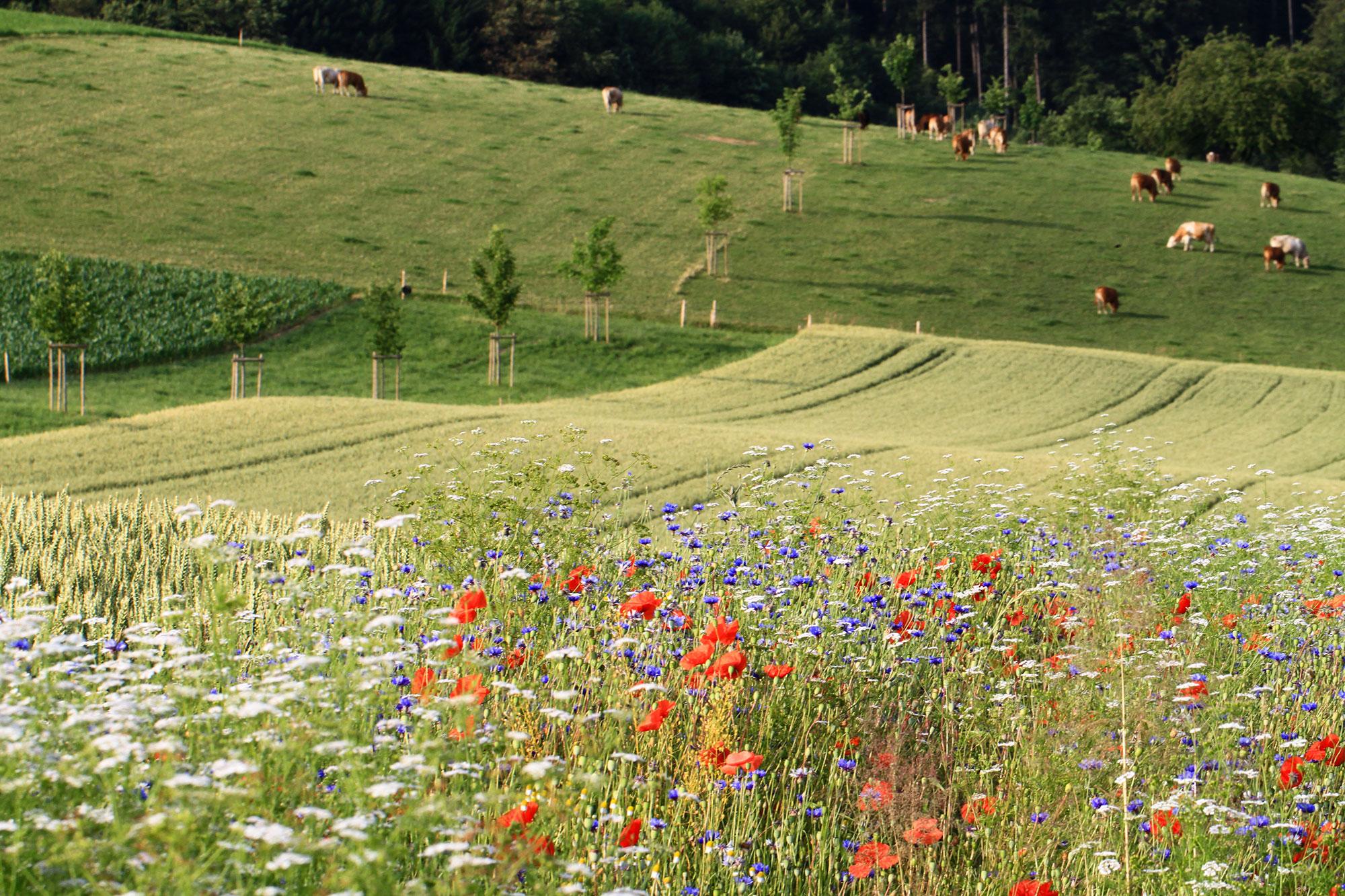
Farmland biodiversity is declining. Many species need habitats that cross farm boundaries. BoBiColAS explores how coordinated measures across farmland can support biodiversity more effectively, assessing costs, incentives, and governance.
Project description
Objective
Swiss farmland biodiversity is under pressure: many species need connected habitats that cross farm boundaries, but most conservation measures are planned plot by plot. BoBiColAS explores how coordinated action across landscapes can better protect biodiversity. Together with scientists and stakeholders, the project identifies priority species and effective measures to preserve them most. It also looks at the costs of different measures, examines how ecological areas can be linked, and explores ways to motivate farmers to join collective schemes of biodiversity promotion. Finally, it analyses governance models that could make such cooperation effective in the context of agricultural policy reforms.
Relevance
Working together across fields and farms is one of the most effective ways to slow biodiversity loss in Switzerland. But such collaboration can reduce yields and income, and farmers may be hesitant to join. BoBiColAS addresses these issues by looking not only at the ecological benefits of spatially coordinated biodiversity support measures, but also at the economic, social, and political conditions that shape decisions. By showing the costs, identifying incentives, and pointing out effective governance approaches, the project helps design schemes that are both attractive for farmers and supporting biodiversity effectively.
Transdisciplinary Approach
From the outset, the BoBiColAS team works closely with farmers, conservationists, and public authorities to ensure that its findings are both scientifically sound and practically useful. Stakeholders are involved at national and cantonal levels through workshops, focus groups, and a practice feedback hub coordinated with the Canton of Aargau as societal partner. They help select case studies, give feedback on research design and results, and support outreach activities. This continuous exchange ensures that the project addresses real-world challenges and delivers knowledge that is directly relevant for practice. By co-creating research and outreach materials with practitioners and administrators, BoBiColAS fosters ownership and increases the chances that its results will be taken up in both farming practice and agricultural policy.
Original Titel
Boosting Biodiversity through Collaborative Agri-environmental Schemes (BoBiColAS)