
Kick-off in Bern: How NRP 82 unites science and practice for biodiversity
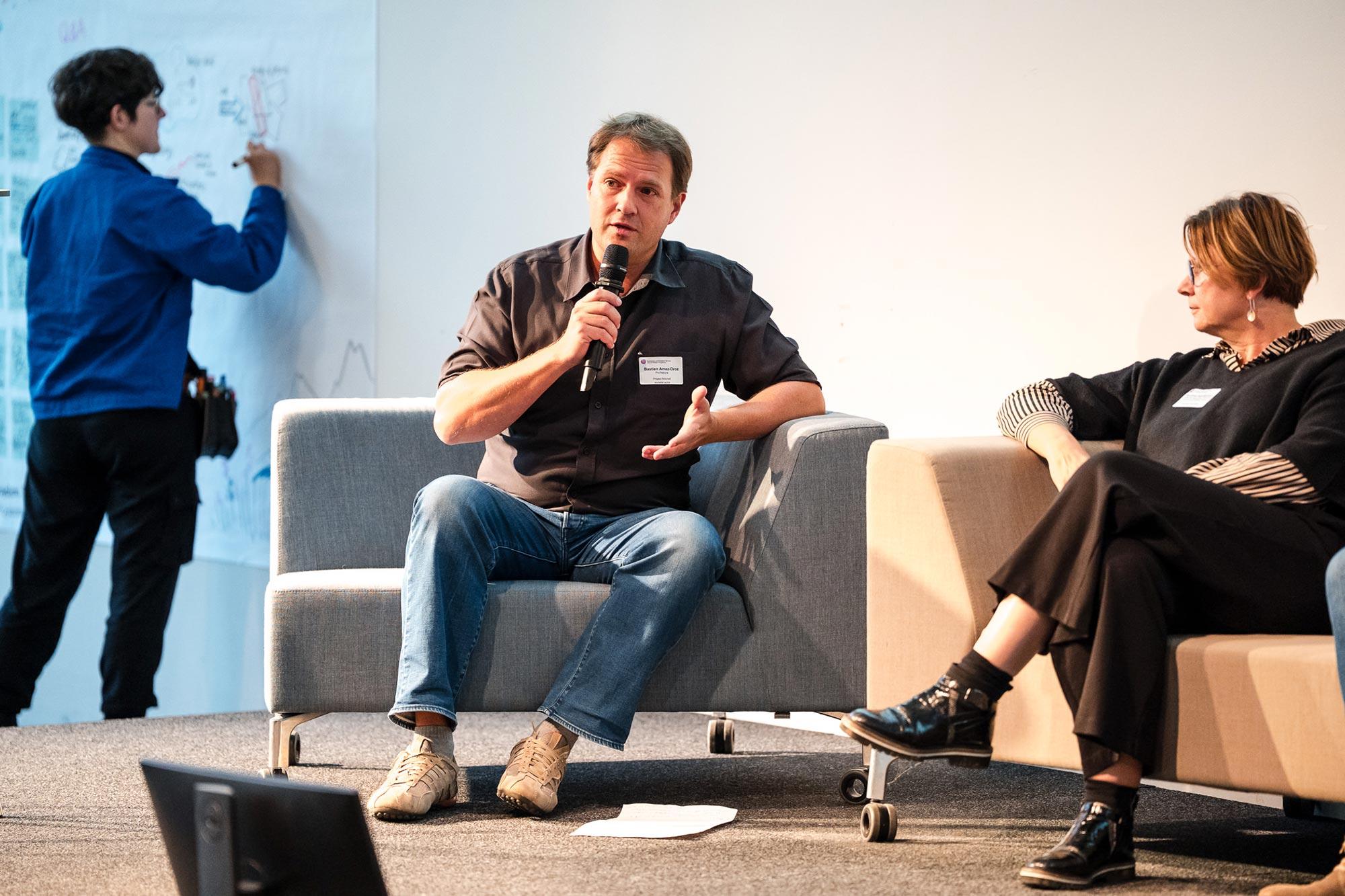
In November, researchers, practice partners and the Steering Committee met for the kick-off of NRP 82. Two days full of exchange, critical reflection and the will to make biodiversity research effective.
It took 18 years. Two applications for a national research programme on biodiversity were rejected, and one application for a competence centre was also unsuccessful. When the next call for proposals came, Markus Fischer, president of NRP 82 and head of the Institute of Plant Sciences at the University of Bern, had actually given up. But one day before the deadline, he still sent in an application. His message to the assembled group: ‘Even if the chances are very small and the process is very long – just keep going.’
Uncompromising stocktaking
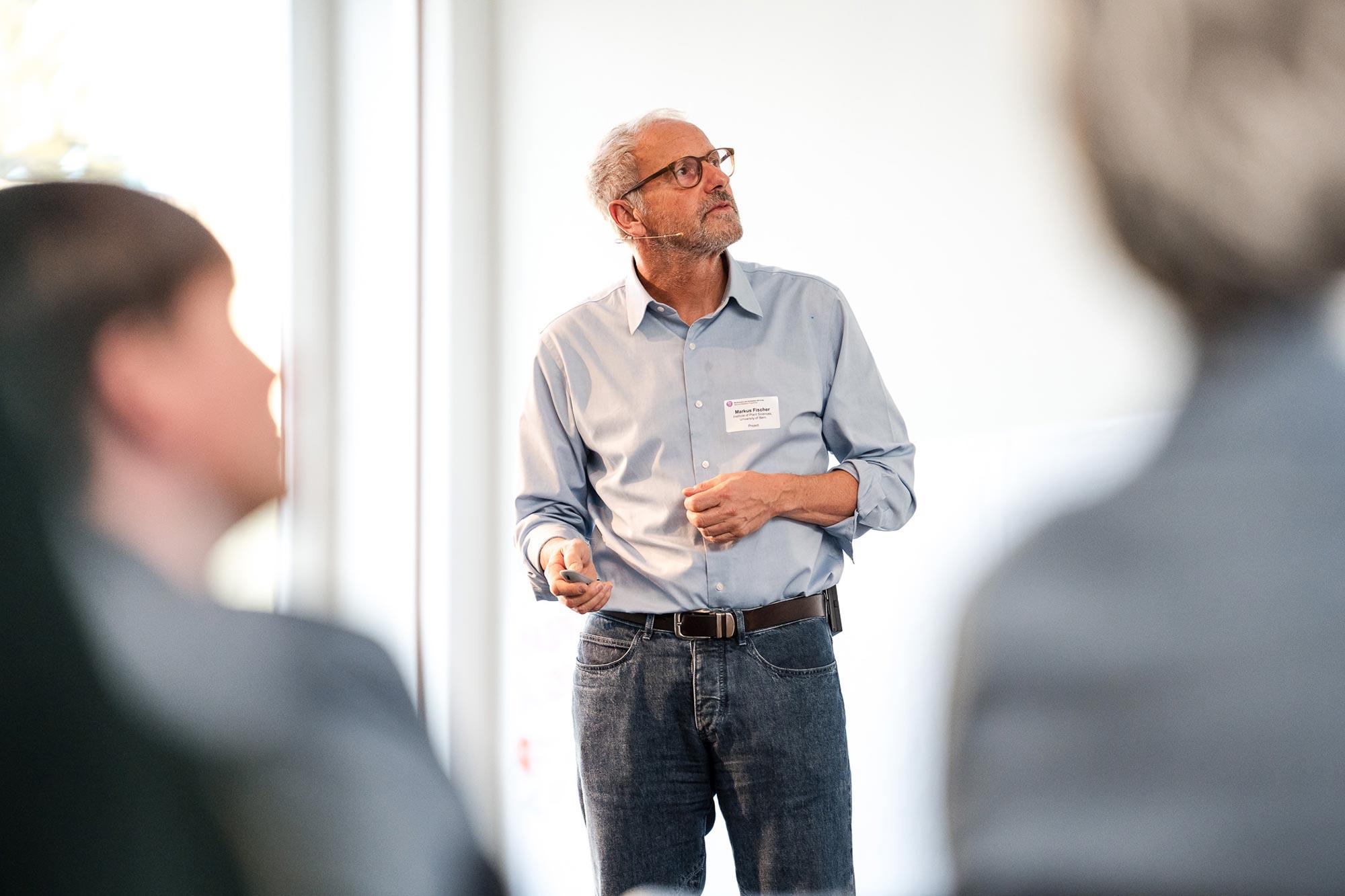
Markus Fischer opened the meeting at the Fiul Space in Wabern with a clear diagnosis: globally, around one million species are threatened. The extinction rate is ten times higher than during the great mass extinctions in the history of the Earth. In Switzerland, 42 per cent of the populations of threatened plant species have already disappeared. ‘We are at the beginning of another mass extinction,’ said Fischer. ‘It is in our hands whether we allow this to happen.’
Generalist species are winning everywhere, while specialist species are disappearing – with direct consequences for the ecosystem services on which humans also depend: pollination, water filtration, climate regulation or soil fertility. The drivers are well known: intensive land use, habitat fragmentation, pollution, invasive species and climate change. The problem is that all these drivers are moving in the wrong direction from the point of view of biodiversity.
Transformation as the only way
In her keynote speech, Julia Leventon from CzechGlobe showed what transformative change means in practice: a fundamental system-wide reorganisation of technology, the economy and society – including paradigms, goals and values. ‘Business as usual will get us nowhere,’ Markus Fischer summarised. Only sustainability scenarios that focus on long-term social transformation will achieve the international biodiversity goals.
15 projects in three thematic areas
In the afternoon of the first day, all 15 project teams presented their plans in three-minute pitches. The thematic breadth is impressive: from agriculture to water and forest ecosystems, to value chain, vegetation and education. The programme is divided into three modules – drivers and trends, valuations and visions, and governance and transformation.
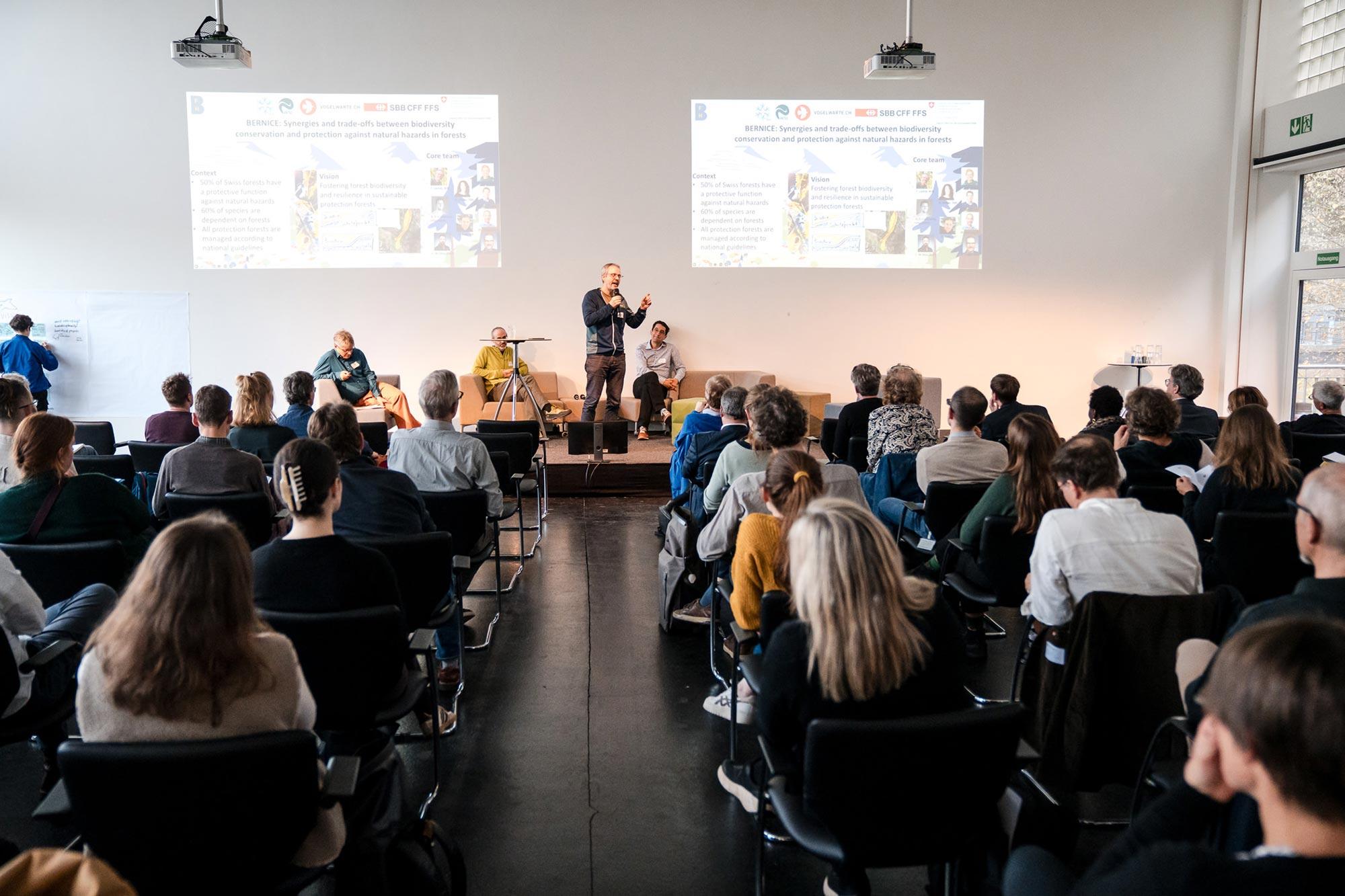
The panel discussion that followed made clear what makes NRP 82 so special: all the projects were developed from the outset in collaboration with partners from the field. ‘The diversity of disciplines and case studies is a huge asset,’ emphasised Sandrine Petit-Michaut from INRAE and a member of the Steering Committee. The aim is not only to generate knowledge, but also to produce ‘actionable knowledge’ – findings that can be applied directly.
Trust takes time
Bastien Amez-Droz from Pro Natura emphasised that real change can only be achieved through relationship-building: ‘We have to go all the way to the farmer, sometimes even to the farmer’s uncle. You have to be willing to share your mobile phone number. That’s when trust is built.’
Expectations for the programme are high – and varied. Christine Moos from Bern University of Applied Sciences hopes for ‘recommendations that are really feasible and are already having an impact – even if only in small places.’ Melf-Hinrich Ehlers from Agroscope has bigger ambitions: ‘Perhaps the topic will become more visible in the national discourse. Perhaps we will have transformed some institutions. Perhaps new types of politics will have become conceivable.’ Norbert Kräuchi from the canton of Aargau warned that time was of the essence: ‘The synthesis should actually start today and not in four or five years, in order to keep everyone on board.’
Learning in the programme
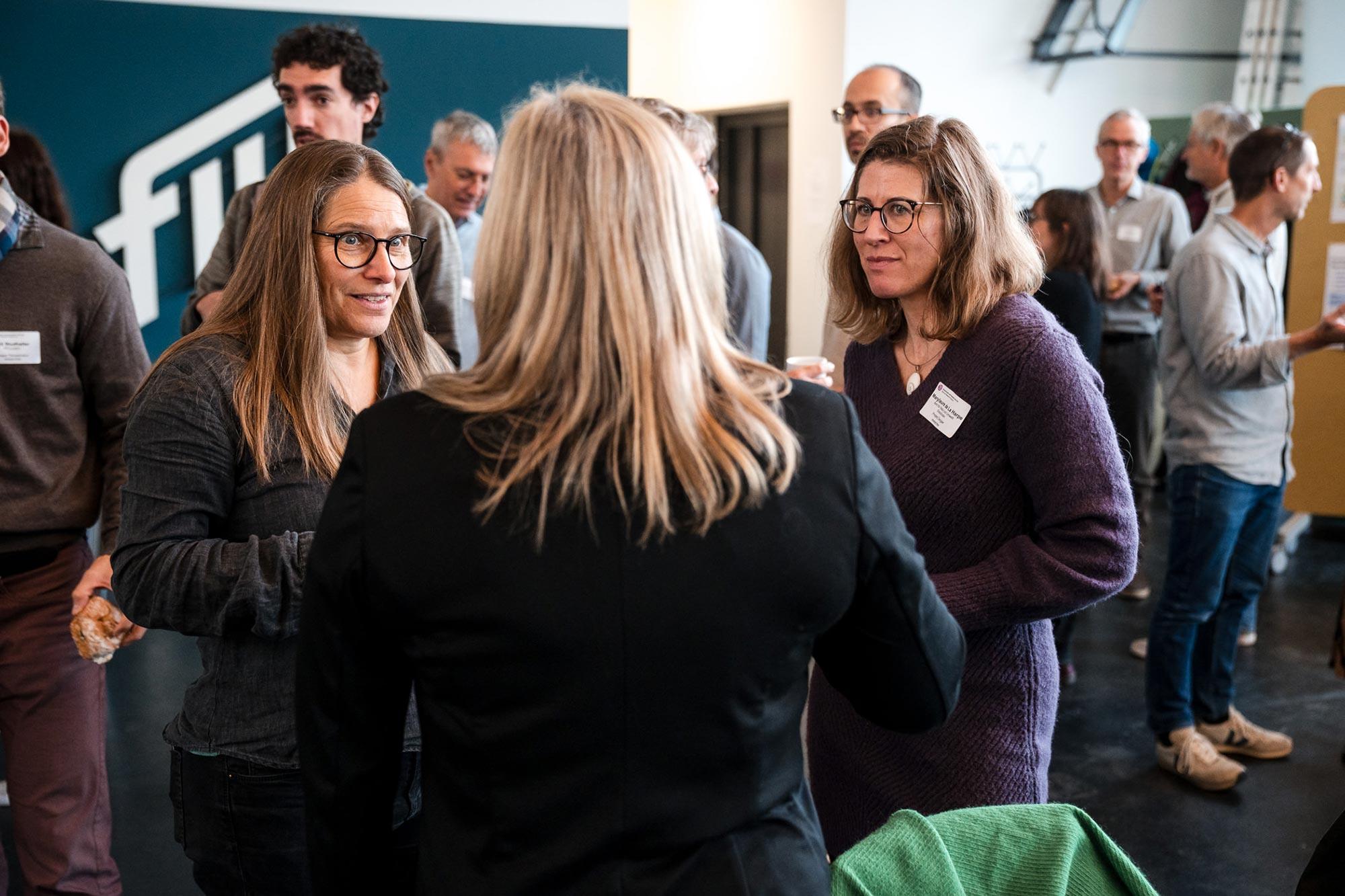
The second day was all about collaboration. Christian Pohl from ETH Zurich and Camilla Sandström from Umeå University shed light on the challenges of transdisciplinary research. In a World Café guided by transdisciplinary expert Léon Simon Späth, the participants jointly identified their learning needs for the upcoming research phase and laid the foundations for the first learning groups on overarching topics.
Change begins with oneself
Markus Fischer concluded with a personal observation: ‘Over the years, I have noticed that research programmes aimed at changing people ultimately change one group the most – namely, the people involved in the programme.’ His promise to the audience: ‘You will all change in the process. And I think for the better.’