
Transformative change for biodiversity – what research needs to change
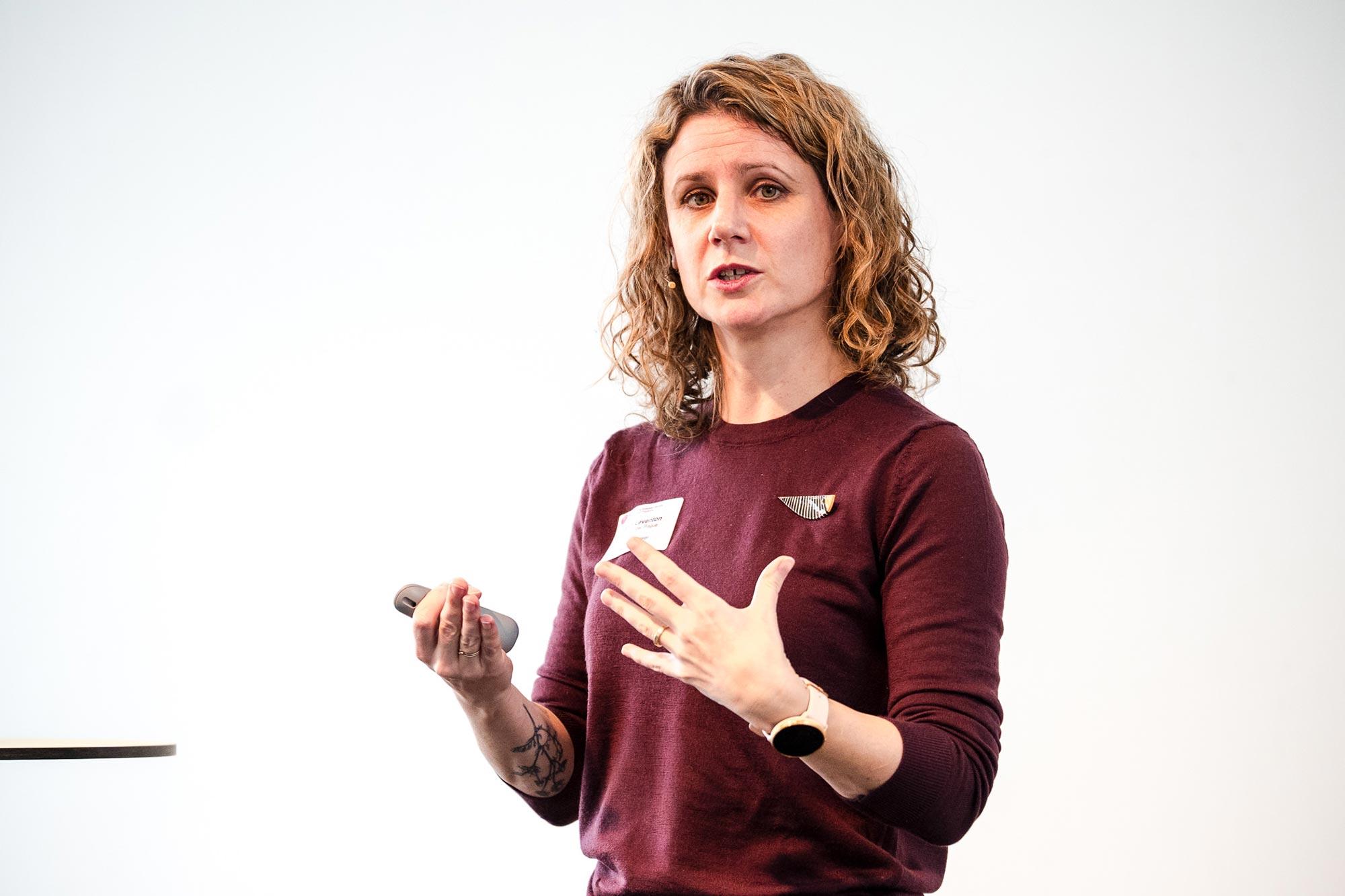
At the kick-off of NRP 82, Julia Leventon presented the findings of the IPBES report: Current measures are addressing symptoms, not causes. For real change, a fundamental change of direction is needed.
Julia Leventon travelled from Prague, where she researches sustainable societies at the Czech Globe, an institute of the Czech Academy of Sciences. As lead author of the IPBES (Intergovernmental Science-Policy Platform on Biodiversity and Ecosystem Services) Transformative Change Assessment, she brought the essence of three years of global research work with her: more than 100 experts from 42 countries had evaluated more than 7000 references and processed over 10,000 comments.
More of the same is not enough
The central finding is sobering: despite the growth of protected areas, the increase in multilateral environmental agreements, and the exponential increase in knowledge about biodiversity, the loss of species is unabated. ‘We cannot simply do more of the same,’ Leventon stressed. ‘We need to change course.’
The reason: Previous measures have been addressing symptoms, not causes. The assessment identifies three profound patterns in dominant societies that drive biodiversity loss: alienation from and domination over nature and people, the concentration of power and wealth, and the prioritisation of short-term, material gains for individuals.
Four Principles for Real Change
How can transformative change succeed? The assessment identifies four principles: justice and fairness, pluralism and inclusion, adaptive learning and action, and respectful, reciprocal human-nature relationships. Leventon particularly emphasised adaptive learning: ‘Transformative change is not a state that you reach. It is an ongoing process that requires adaptation and reflection.’
These principles must be embedded in worldviews, structures, and practices – in how we understand the world, how we organise ourselves, and how we act. This requires change at all levels: from individual behavioural changes to international governance structures.
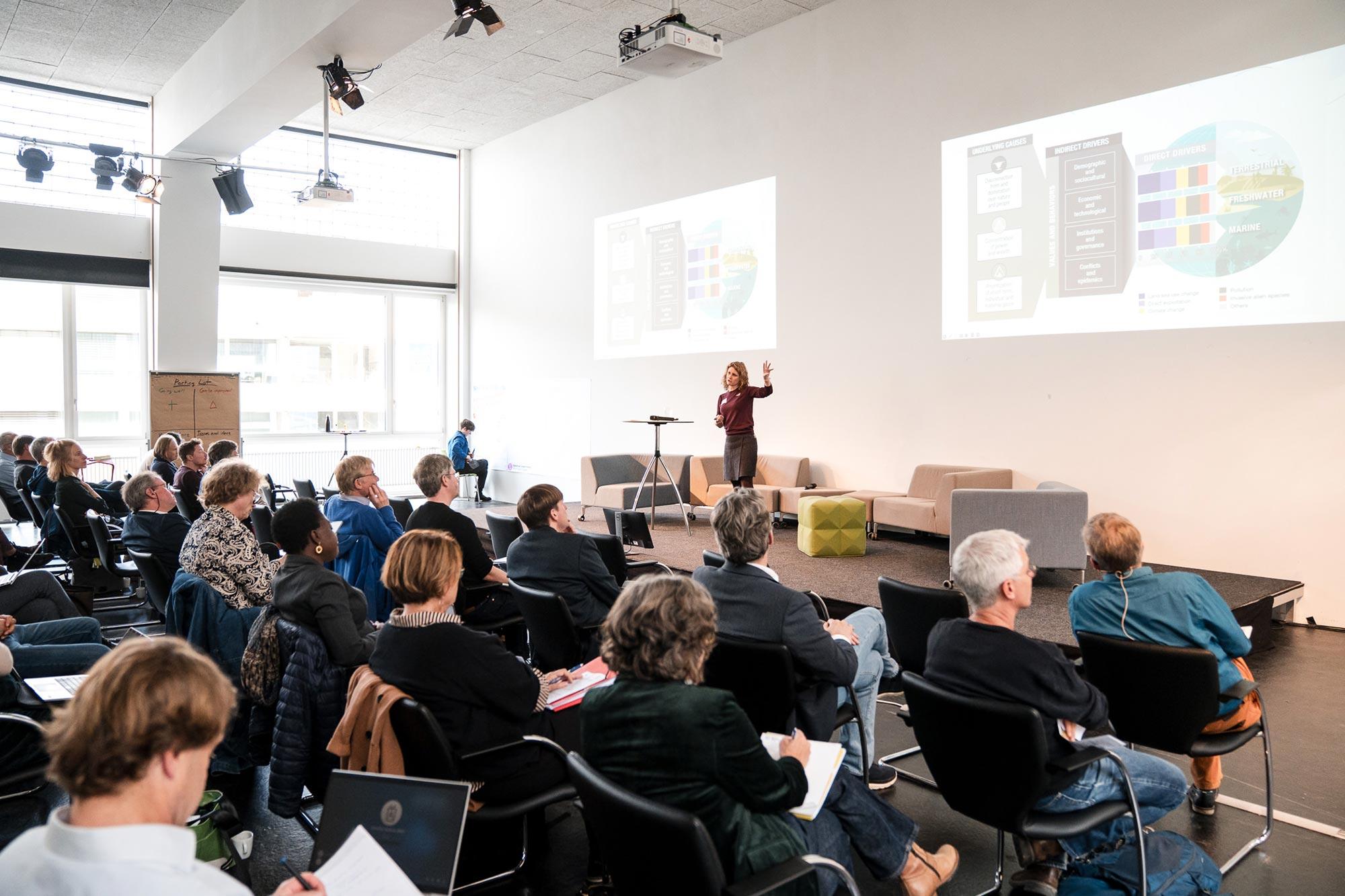
Five strategies – all necessary
The assessment defines five strategies that must work together: preserving and regenerating valuable places; transforming governance systems; reshaping economic structures, especially in sectors such as agriculture and mining; changing societal narratives about nature; and strengthening the connection between humans and nature.
Concrete examples give hope
Leventon also presented encouraging case studies. Agroecology, for example, requires changes in practices, structures and values at the same time – from innovative farmers to supportive policies to social movements. The Gamuza Academy in Brazil, meanwhile, teaches schoolchildren where food comes from, creating awareness that radiates out into families and communities.
Research as a catalyst
For the research projects of NRP 82, Leventon formulated three specific expectations:
First, more case studies of context-specific approaches are needed. Transformative change does not look the same everywhere. What works in Switzerland is not necessarily applicable in Brazil. Research therefore needs documented examples from different contexts, scales and societies – to understand how the abstract principles can be implemented on the ground.
Secondly, she calls for cultural insights: How do people undergo ‘inner transformations’ in processes of transformation? How are they empowered, and how do these personal changes radiate out into communities? The example of the Gamuza Academy shows this: Children learn about food, talk about it at home, and slowly the awareness in the family changes.
Third, transdisciplinary collaboration is essential. Science alone is not enough. Researchers must work with stakeholders from the outset – with farmers, politicians, NGOs, communities. Not producing knowledge and then handing it over, but learning and acting together.
‘There is value in knowledge,’ Leventon said, ‘but not if it ends there. It must be a springboard for difficult conversations.’
When asked about current populism and climate scepticism, Leventon responded with cautious optimism: ‘Systems can change quickly, as the fall of communism in Eastern Europe shows. We need to be prepared – with knowledge, skills and democratically negotiated visions.’
Their conclusion: ‘Transformative change for a just and sustainable world is possible. Difficult, but possible.’